
Have you ever noticed your car pulling to one side, experiencing steering wheel vibrations or seeing uneven tyre wear? These could be signs that your vehicle needs wheel alignment or wheel balancing.
Although both services are important for maintaining tyre performance and driving comfort, they address different problems.
Understanding the difference helps you identify the right service and maintain your tyres more effectively.
1. What Is Wheel Alignment?
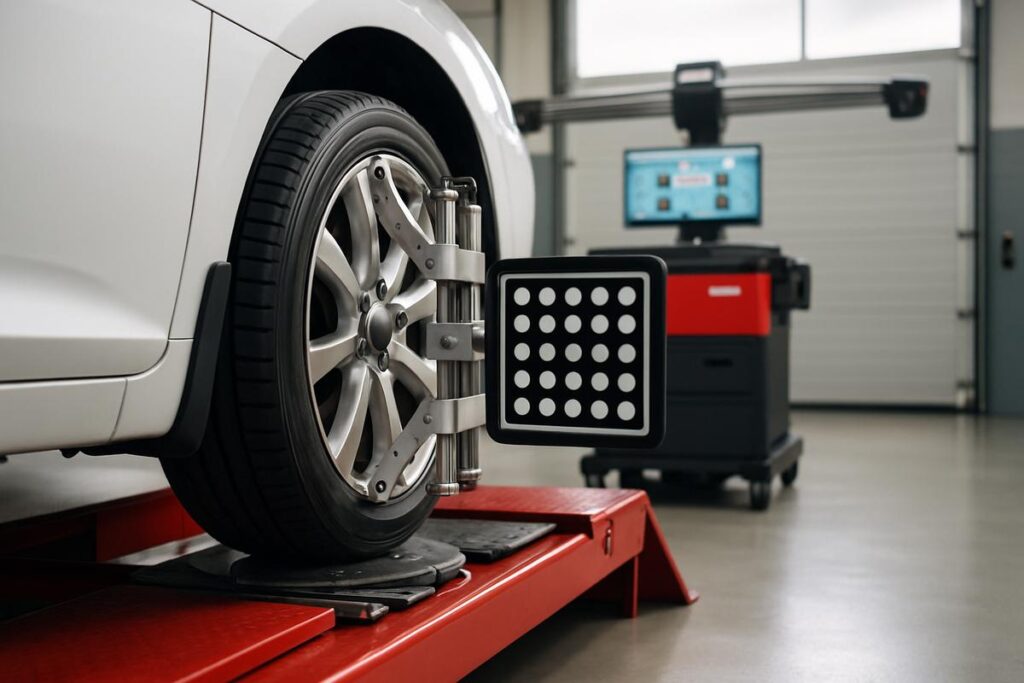
Wheel alignment is the process of adjusting the angles of your vehicle’s wheels according to the manufacturer’s specifications.
The main alignment angles include:
- Camber: The inward or outward tilt of a wheel when viewed from the front.
- Caster: The angle of the steering axis when viewed from the side.
- Toe: The direction in which the wheels point when viewed from above.
Correct wheel alignment helps ensure that your tyres make proper contact with the road and that your vehicle tracks in the intended direction.
Signs Your Vehicle May Need Wheel Alignment
Look out for these common warning signs:
- 1. The vehicle pulls towards the left or right.
- 2. The steering wheel is off-centre when driving straight.
- 3. Tyres show uneven or abnormal wear.
- 4. Steering feels less stable than usual.
Wheel alignment should also be checked after certain suspension or steering repairs and when recommended by your vehicle manufacturer.
2. What Is Wheel Balancing?
Wheel balancing ensures that the weight of a wheel and tyre assembly is distributed evenly around its rotational axis.
Even small weight differences can cause vibration when the wheel rotates at higher speeds.
During balancing, a technician uses a specialised balancing machine to identify uneven weight distribution and attaches small counterweights to correct it.
Signs Your Vehicle May Need Wheel Balancing
Common warning signs include:
- Steering wheel vibration at certain speeds.
- Vibration felt through the seat or vehicle body.
- Unusual vibration during highway driving.
- Uneven tyre wear associated with vibration.
Wheel balancing is also recommended when fitting new tyres or whenever a tyre is removed from its wheel for certain repairs.
3. Key Differences Between Wheel Alignment and Wheel Balancing
| Feature | Wheel Alignment | Wheel Balancing |
|---|---|---|
| Main purpose | Correct wheel angles | Distribute weight evenly |
| Addresses | Vehicle tracking and alignment | Rotational imbalance |
| Common symptom | Vehicle pulling to one side | Steering or vehicle vibration |
| Equipment | Wheel alignment system | Wheel balancing machine |
| Adjustment | Camber, caster and toe, where adjustable | Small counterweights |
Both services contribute to better tyre performance, but one cannot replace the other.
4. Why Are Both Services Important?
Regular attention to alignment and balancing can help:
- 1. Improve vehicle stability and handling.
- 2. Support even tyre wear.
- 3. Reduce unwanted steering and vehicle vibration.
- 4. Improve driving comfort.
- 5. Help tyres perform as intended.
They are important parts of overall vehicle and tyre maintenance.
5. When Should You Get Alignment and Balancing Checked?
Consider getting these services checked:
- 1. When installing new tyres.
- 2. After hitting a pothole or kerb with significant impact.
- 3. When you notice uneven tyre wear.
- 4. When the steering wheel is not centred.
- 5. When unusual vibration develops.
- 6. After relevant steering or suspension repairs.
The correct inspection frequency depends on your vehicle, driving conditions and manufacturer’s recommendations.
6. Can Wheel Alignment Fix Steering Vibration?
Not necessarily.
Steering vibration can be caused by wheel imbalance, tyre damage, uneven wear, bent wheels or other mechanical issues.
Wheel alignment primarily corrects wheel angles. If your vehicle vibrates, a proper inspection is needed to identify the actual cause before selecting the appropriate service.
Final Thoughts
Wheel alignment and wheel balancing are two different but equally important aspects of tyre care.
Alignment helps your wheels maintain the correct angles, while balancing ensures smooth rotation of the wheel and tyre assembly.
Understanding these differences can help you recognise warning signs early and make better decisions about vehicle maintenance.
At MK Tyres, we provide wheel alignment and balancing services to help customers maintain tyre performance, driving comfort and vehicle stability.
Experiencing steering vibration or uneven tyre wear?
Contact MK Tyres to enquire about our wheel alignment and balancing services.
3 Comments
This is exactly what i was looking for, thank you so much for these tutorials
It would be great to try this theme for my businesses
What a nice article. It keeps me reading more and more!