Your vehicle’s tyres play a crucial role in road safety, braking, handling and driving comfort. However, tyres gradually wear out through regular use, exposure to road conditions and environmental factors.
Driving with excessively worn or damaged tyres can compromise vehicle performance, particularly during wet weather and emergency braking.
Knowing when to replace your tyres helps you maintain better road grip and avoid unexpected problems.
Here are seven important warning signs every vehicle owner should know.
1. Low Tyre Tread Depth
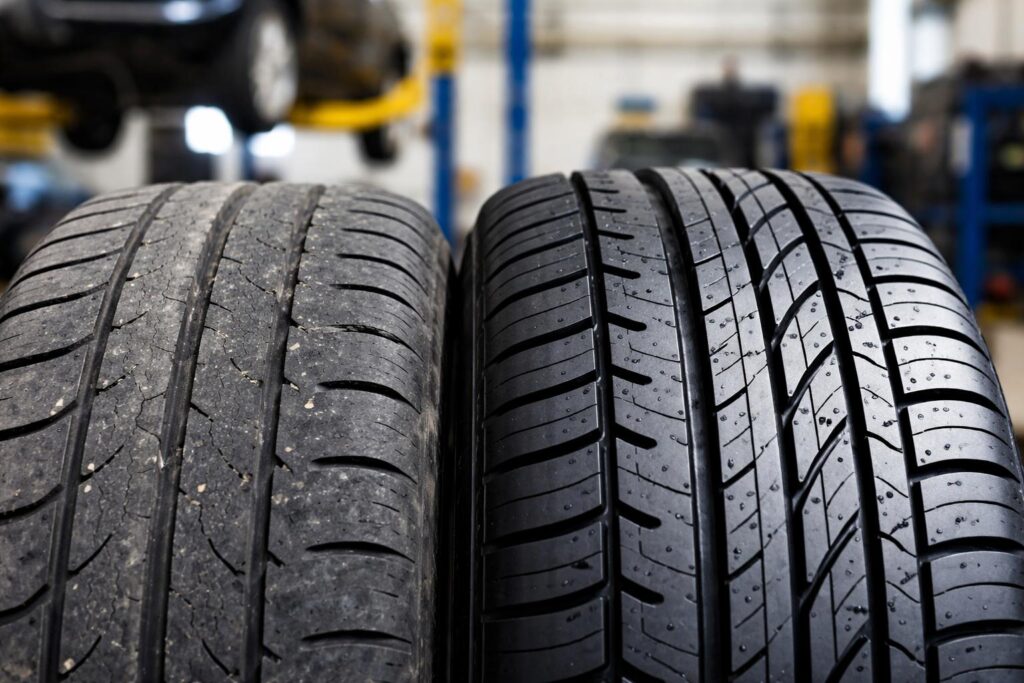
The tread is the patterned surface of a tyre that helps provide grip and channel water away from the contact area.
As tyres wear down, their ability to maintain traction, especially on wet roads, can decrease.
Check the tread wear indicators built into your tyres. If the tread becomes level with these indicators, it is time to replace the tyre.
For many passenger car tyres, the commonly referenced legal minimum tread depth in India is 1.6 mm. Always check the applicable regulations and vehicle manufacturer’s guidance.
2. Cracks on the Tyre Sidewall
Inspect the sidewalls of your tyres regularly.
Small cracks, cuts or visible deterioration may develop due to ageing, heat, sunlight and environmental exposure.
Significant cracking can weaken the tyre structure. If you notice deep cracks or exposed internal material, have the tyre inspected promptly and replace it if necessary.
3. Bulges or Blisters on the Tyre
A bulge on the sidewall is a serious warning sign.
It may indicate internal structural damage caused by an impact, such as hitting a pothole or kerb.
A tyre with a sidewall bulge can be at risk of sudden failure. Do not continue driving on it unnecessarily. Arrange a safe inspection and replacement.
4. Uneven Tyre Wear
Tyres should generally wear evenly across their tread when maintained correctly.
Watch for these patterns:
- Excessive wear on both shoulders.
- Excessive wear in the centre of the tread.
- Uneven wear on one side.
- Irregular or patchy wear patterns.
Uneven wear can be associated with incorrect tyre pressure, alignment issues, balancing problems, suspension faults or other mechanical conditions.
Have the underlying cause inspected before fitting replacement tyres.
5. Frequent Air Pressure Loss
If one tyre repeatedly loses air pressure, it may have a puncture, valve problem, damaged rim or other leakage issue.
While some punctures can be repaired safely, not every tyre is suitable for repair.
A professional inspection can help determine whether repair or replacement is the appropriate solution.
6. Excessive Vibration While Driving
Unusual vibration through the steering wheel, seat or vehicle body may indicate a tyre or wheel-related problem.
Possible causes include:
- Wheel imbalance.
- Tyre damage.
- Irregular tread wear.
- Bent or damaged wheels.
- Suspension or steering issues.
If vibration continues, arrange a professional inspection rather than assuming that new tyres are always required.
7. Tyre Age and General Condition
Tyres can deteriorate over time even when the vehicle is driven infrequently.
Check the manufacturing date on the tyre sidewall. The final four digits of the DOT date code indicate the week and year of manufacture.
For example, 3524 indicates the 35th week of 2024.
Age alone does not determine whether a tyre must be replaced. Consider the manufacturer’s recommendations, storage conditions, visible deterioration and professional inspection.
How Often Should You Inspect Your Tyres?
Make tyre inspection part of your regular vehicle maintenance routine.
Check for:
- Adequate tread depth.
- Cuts, cracks and sidewall bulges.
- Uneven wear.
- Correct air pressure.
- Visible damage or embedded objects.
Inspect tyres before long journeys and whenever you notice changes in handling, vibration or pressure.
Final Thoughts
Tyre replacement is an important part of responsible vehicle ownership. Recognising worn tread, sidewall damage, bulges and irregular wear can help you identify potential safety concerns early.
Do not wait until a tyre becomes completely worn or damaged before taking action. Regular inspection and timely replacement help maintain safer and more confident driving.
At MK Tyres, we help customers explore suitable tyre options for different vehicles and driving requirements.
Not sure whether your tyres need replacement?
Get in touch with MK Tyres for assistance with tyre inspection and replacement options.
3 Comments
This is exactly what i was looking for, thank you so much for these tutorials
It would be great to try this theme for my businesses
What a nice article. It keeps me reading more and more!