Tyre pressure is one of the most important aspects of routine vehicle maintenance. Although it may seem like a small detail, maintaining the correct air pressure in your tyres can significantly influence vehicle handling, braking performance, fuel efficiency and tyre lifespan.
Driving with underinflated or overinflated tyres can affect how your vehicle responds on the road. Regular tyre pressure checks help maintain better performance and contribute to safer driving.
In this guide, MK Tyres explains why tyre pressure matters and how to maintain it correctly.
1. Why Is Correct Tyre Pressure Important?
Every vehicle has a recommended tyre pressure specified by its manufacturer. Maintaining this recommended pressure helps the tyre maintain its intended shape and contact with the road.
Correct tyre pressure supports:
- 1. Better road grip and handling.
- 2. More predictable braking performance.
- 3. Improved driving comfort.
- 4. More even tyre wear.
- 5. Efficient rolling resistance and fuel consumption.
2. What Happens When Tyres Are Underinflated?
Under-inflated tyres contain less air pressure than recommended.
This can result in:
- 1. Increased rolling resistance.
- 2. Higher fuel consumption.
- 3. Excessive heat generation.
- 4. Increased wear along the tyre shoulders.
- 5. Reduced handling stability.
Driving for extended periods with significantly low tyre pressure can increase the risk of tyre damage or failure.
3. What Happens When Tyres Are Overinflated?
Overinflated tyres have pressure above the manufacturer’s recommended level.
Possible effects include:
- 1. Reduced contact area with the road.
- 2. Uneven wear, particularly towards the centre of the tread.
- 3. A firmer and less comfortable ride.
- 4. Reduced ability to absorb road irregularities.
Both underinflation and overinflation should be avoided
4. How to Check Your Tyre Pressure
Follow these simple steps:
- Check your vehicle manufacturer’s recommended tyre pressure.
- Locate the tyre pressure information in the owner’s manual or vehicle door placard.
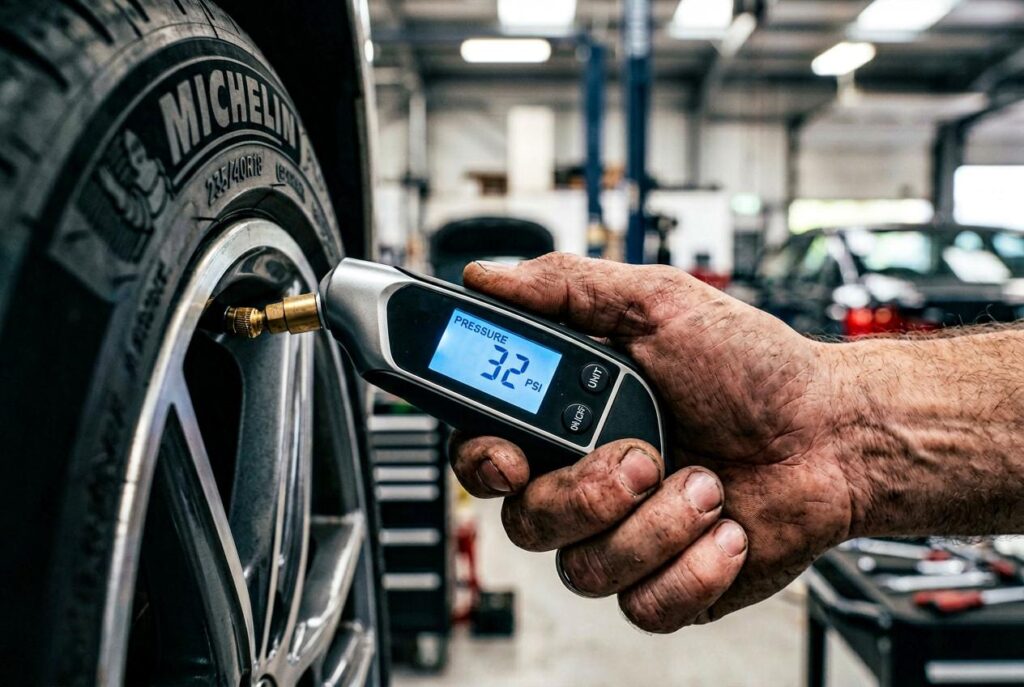
- Use a reliable tyre pressure gauge.
- Check the pressure when the tyres are cold, ideally before driving or after the vehicle has been parked for several hours.
- Inflate or release air as required.
- Check all tyres, including the spare if applicable.
Remember that the recommended front and rear tyre pressures may differ depending on the vehicle and load conditions.
5. How Often Should You Check Tyre Pressure?
As a general maintenance practice, check your tyre pressure at least once a month and before long journeys.
It is also advisable to check pressure when:
- Carrying additional passengers or heavy luggage.
- Experiencing unusual changes in vehicle handling.
- Noticeably losing tyre pressure.
- Preparing for a long highway journey.
Always follow the vehicle manufacturer’s recommendations for pressure adjustments under different load conditions.
6. Does Tyre Pressure Affect Fuel Efficiency?
Yes. Incorrect tyre pressure, particularly underinflation, can increase rolling resistance. This means the engine needs to work harder to move the vehicle, potentially increasing fuel consumption.
Maintaining the recommended tyre pressure helps reduce unnecessary rolling resistance and supports efficient vehicle operation.
7. Don’t Forget Nitrogen Inflation
Nitrogen inflation is another option offered by many tyre service centres.
Nitrogen can help reduce pressure variation associated with temperature changes and may slow pressure loss under certain conditions. However, it does not eliminate the need for regular pressure checks.
The most important factor is maintaining the manufacturer’s recommended tyre pressure, whether using regular compressed air or nitrogen.
Final Thoughts
Correct tyre pressure is essential for maintaining tyre performance, driving comfort, fuel efficiency and road safety.
Make tyre pressure checks part of your regular vehicle maintenance routine. A simple check can help identify pressure problems before they develop into more serious tyre issues.
At MK Tyres, we help customers with tyre care and inflation services to support better tyre performance and a more confident driving experience.
Need assistance with tyre pressure or inflation?
Get in touch with MK Tyres for tyre care support.
3 Comments
This is exactly what i was looking for, thank you so much for these tutorials
It would be great to try this theme for my businesses
What a nice article. It keeps me reading more and more!